
EV Fleets + Ride-Hailing – The Future of Green Taxi Startups
Electric vehicles are not a futuristic concept for mobility. They are becoming the present. And if there’s one space where the shift to EVs will completely transform business models, economics & customer experience, it’s the ride-hailing industry. From local cab aggregators to ambitious startup founders planning to launch the best cab booking app, the message is clear: the future of profitable taxi businesses is electric.
And here’s the thing. Building an online taxi booking app today without integrating an EV strategy could make your business outdated within the next three years. The world is moving toward greener, cleaner transportation. The question is not if, but how fast you adapt.
This article explores why EV-powered fleets are becoming the winning formula for taxi startups, how technology can enable this transition & what you must build into your cab service app or car booking app to stay competitive.
Why EV Adoption is Accelerating in Ride-Hailing
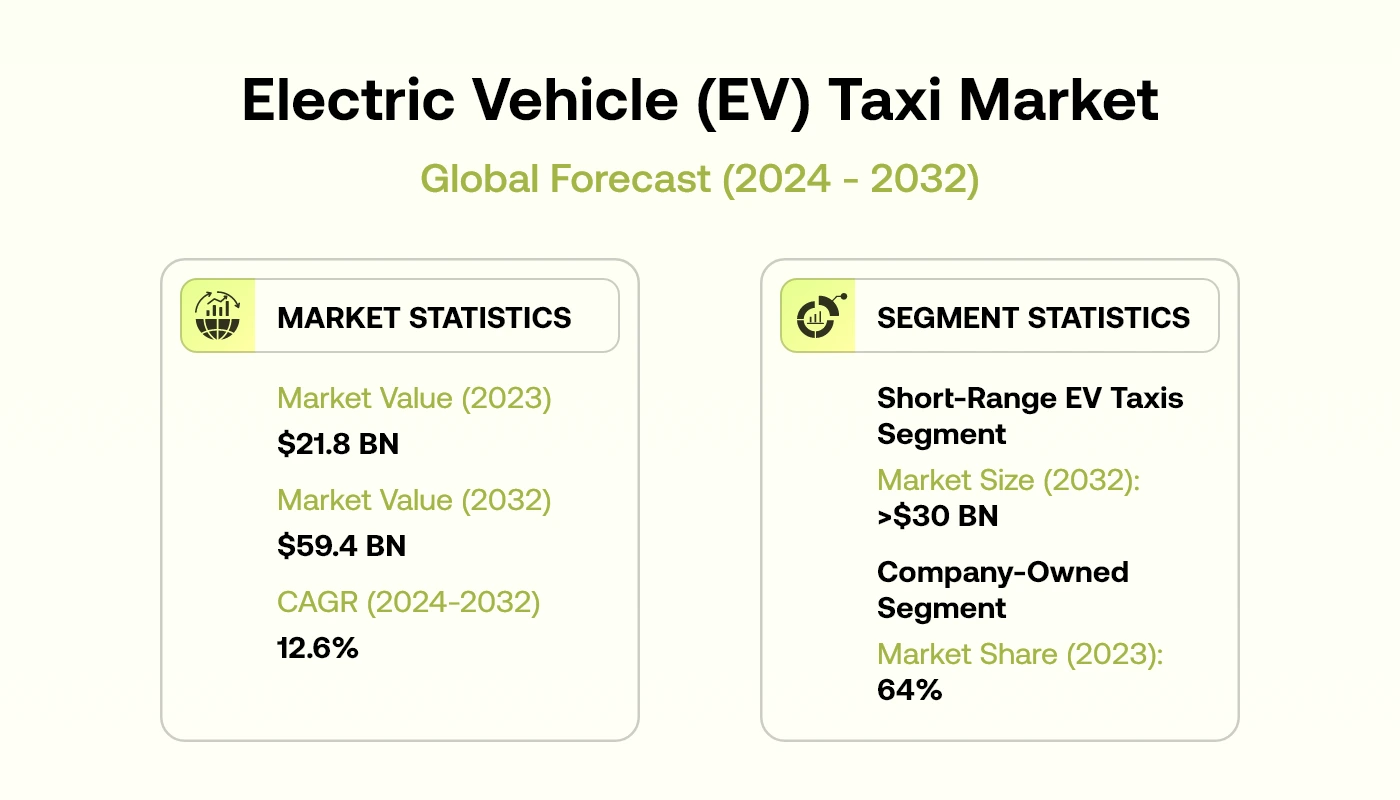
Let’s be real. Customers are no longer just booking rides. They are making value-based choices. Sustainability is becoming a decision driver. Here’s what’s fueling the rise of EV-based ride-hailing:
- Lower Operational Costs for Fleet Owners
EVs cost more upfront but have significantly lower running and maintenance costs compared to petrol or diesel vehicles. Over time, this results in better profit margins per ride. - Government Push and Incentives
Most countries now offer subsidies, tax relief & reduced permit costs for EV commercial fleets. This lowers entry barriers for new taxi startups. - Sustainability as a Competitive Edge
Modern riders, especially millennials and Gen-Z, prefer eco-friendly options. An EV-focused cab booking app becomes a brand that people trust and feel good using. - Better Ride Experience
EV rides are smoother, quieter & often more comfortable. For passengers, it upgrades the “taxi experience”.
Put simply, EV taxi fleets are not just greener. They make business sense.
Benefits of EV-Based Ride-Hailing for New Taxi Startups
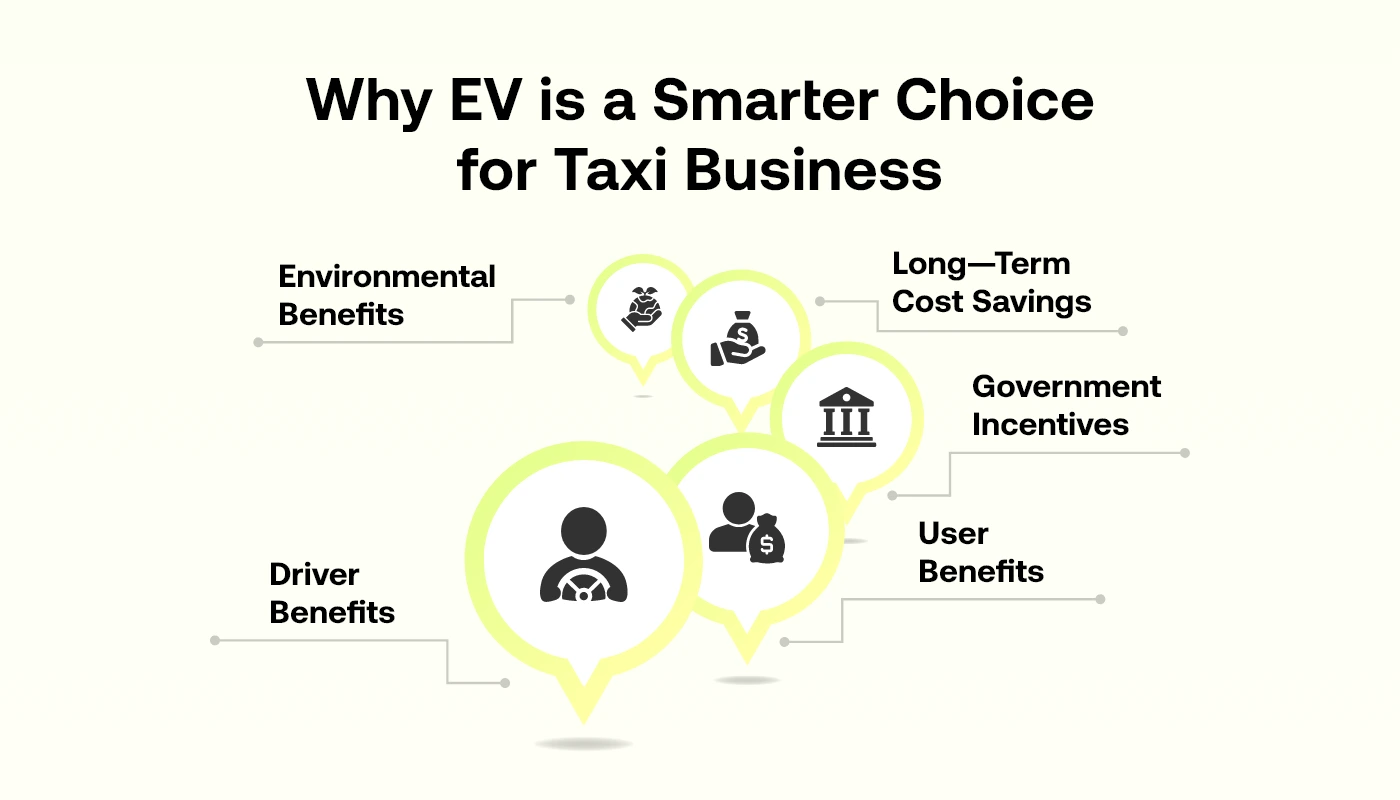
Traditional ride-hailing is oversaturated. Competing with giants on pricing alone is a losing game. EV fleets create differentiation that isn’t easy for others to copy quickly. A startup building a white label taxi booking app today has the advantage of designing EV-first workflows from day one.
Here’s what EV-led ride-hailing unlocks for new founders:
- Lower cost per ride improves profit potential
- Sustainable positioning improves brand value
- Easier onboarding of eco-aware customers and drivers
- Strong partnerships with EV manufacturers and charging networks
- Long-term scalability without fuel-price dependency
Think of it as shifting from commodity taxi services to a purpose-driven mobility business.
How Technology Will Drive the EV + Ride-Hailing Revolution
Going electric is not just about changing the vehicle. It demands rethinking the technology ecosystem behind the taxi business. A traditional car booking app will not be enough. Platforms need EV-specific capabilities.
Here are the tech upgrades that will define the winners:
- Smart EV-Aware Routing
EV taxis require route planning based on battery levels, charging stations & estimated range. Intelligent routing prevents mid-trip battery issues and reduces downtime.
- Charging Station Integrations
Your cab service app or driver app should display nearby charging stations, availability, pricing & expected wait times. This keeps drivers productive and reduces idle time.
- Battery-Health Analytics
The backend dashboard should monitor the fleet’s battery health, usage efficiency & projected lifecycle to avoid costly breakdowns.
- Dynamic Pricing Based on Battery Levels
Some advanced systems already adjust trip allocation depending on which car has enough charge to complete the ride profitably.
Without these, EV taxi operations become chaotic. With them, they become seamless and scalable.
Key Features of an EV-Ready Taxi Booking Application
Most EV-first startups don’t have the luxury of time or budget to build everything from scratch. That’s why many choose a white label taxi app or readymade taxi app that can be customized for EV use cases.
Here’s what to look for when selecting or building an EV-ready ride-hailing app:
✔ EV trip management workflows
✔ Smart dispatcher for EV fleets
✔ Real-time battery monitoring
✔ Charging partner integrations
✔ Incentive modules for greener drivers
✔ Sustainability reporting
If your tech partner or taxi app developers can integrate this foundation early, you’re building future-proof mobility.
Advantages of EV Models for Ride-Hailing Drivers
The shift to EV ride-hailing benefits drivers more than most people think.
- Lower fuel costs mean higher earnings per trip
- EVs often attract high-value premium trips
- Drivers experience less fatigue due to smoother drives
- Governments offer EV purchase and lease benefits
When a cab booking app offers EV-specific earning boosters or incentives, driver loyalty shoots up.
Growing Consumer Demand for Sustainable Taxi Services
Let’s look at rider expectations. Awareness around climate change has shaped a new behaviour trend: “Conscious mobility choice.”
A rider may choose the best cab booking app because:
- It helps them reduce carbon footprint
- It shows the environmental impact saved per ride
- It allows them to filter or select EV rides
Apps that showcase “You saved 1.4kg of CO₂ today” during checkout create emotional stickiness. Riders return because they feel involved in a movement, not just a transaction.
The Role of White-Label Solutions in EV Taxi Startups
Building a full EV-smart ride-hailing ecosystem from scratch takes time, engineering talent & deep mobility tech expertise. Most founders want to enter the market quickly, test their model & then scale.
This is where a white label taxi app becomes a strategic growth hack. A pre-built, scalable readymade taxi app gives you:
- Faster go-to-market
- Lower development and testing cost
- Customisable branding and UI
- EV features that can be activated or added easily
- Ready admin, driver & passenger modules
Startups get the flexibility to launch fast, validate demand, attract investors & then expand.
Revenue Opportunities for EV Taxi Platforms
The EV model opens new revenue streams that fuel-based taxi services simply can’t match.
Here are monetisation options beyond commissions and dynamic fares:
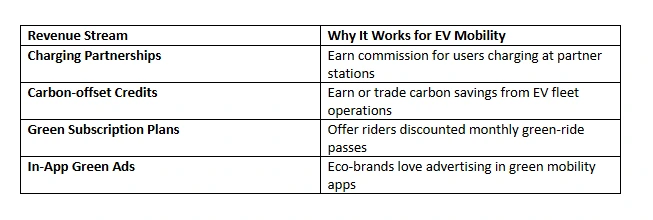
This means an EV-based online taxi booking app can achieve profitability faster and more sustainably.
Investors Prefer EV-Led Ride-Hailing Models
Venture capital is focusing on sustainable mobility. A taxi startup with an EV fleet, smart tech infrastructure & green brand positioning is far more likely to attract funding than a generic taxi app clone. Investors want innovation, not repetition.
The Road Ahead: What Will Change in the Next 5 Years
EV taxi ecosystems will evolve rapidly. Expect these changes:
- Wireless and ultra-fast charging will become standard
- AI will automate fleet distribution based on battery cycles
- Predictive maintenance will eliminate downtime
- Shared-EV taxi hubs will replace fuel stations
- Carbon scoring will influence rider rewards and pricing
By 2030, most new ride-hailing apps will be EV-native, not EV-compatible.
Final Thoughts
If you are planning to build a cab booking app, the strategic choice is clear. The taxi businesses that embrace electric fleets now will lead the mobility market in the next decade. The ones waiting on the sidelines will struggle to compete.
The future of ride-hailing is green, electric & tech-enabled. And with the right white label taxi booking app or EV-ready readymade taxi app, you don’t need millions in development to launch.
Frequently Asked Question
Yes they actually do. EVs cost much less to run than petrol or diesel cars. Taxi owners can save about 35 to 50% on fuel and repair costs. Most EV taxi businesses recover the extra money spent on buying the EV within 1.5 to 2.5 years. The more the taxi runs each day the faster the savings add up.
An EV-friendly car booking app needs a few special features. These include showing charging stations nearby, warning drivers when the battery is low, giving trips that match the battery level & showing battery use and health reports. These features help avoid breakdowns and wasted time.
On busy days, charging can take time and charging spots may be full. This can delay rides. To avoid this, smart EV taxi companies use fast charging, battery swapping & set charging times so not all drivers charge at once. Some also give rewards to drivers who charge during non-rush hours.
A mix of both works best. Many new EV taxi companies first rent or lease EVs to drivers. This helps make sure cars are in good condition. Later, drivers can bring their own EVs if the car meets the company’s rules for battery life, brand & range. Leasing EVs from car companies can also reduce starting costs.
It’s best to start small. Add 10–25% EVs to your fleet, test for 2 to 3 months & see how drivers and customers respond. If things go well, you can add more EVs step by step. This way, the team learns slowly without big problems.
Recent Blogs
The taxi industry is entering one of the biggest transformations it has seen in decades. In 2026, the conversation is no longer just about ride-hailing apps or digital booking. Instead, attention has turned to two potent urban mobility trends that are defining the face of cities all over the world- Electric taxi fleets Subscription-based taxi services […] Read more

The ride-hailing industry is not just about booking a cab anymore. Taxi apps have changed a lot. Today they work like smart mobility platforms that use data, automation and artificial intelligence. As people expect better service and more choices, taxi businesses must keep up. If they don’t use new technology, they may fall behind. The […] Read more

The taxi industry has changed more in the last decade than it did in the previous fifty years combined. Customers no longer wave at taxis or call dispatch numbers. They expect instant bookings, real-time tracking, digital payments, and transparent pricing — all from their phones. For taxi businesses, this shift is no longer optional. In […] Read more