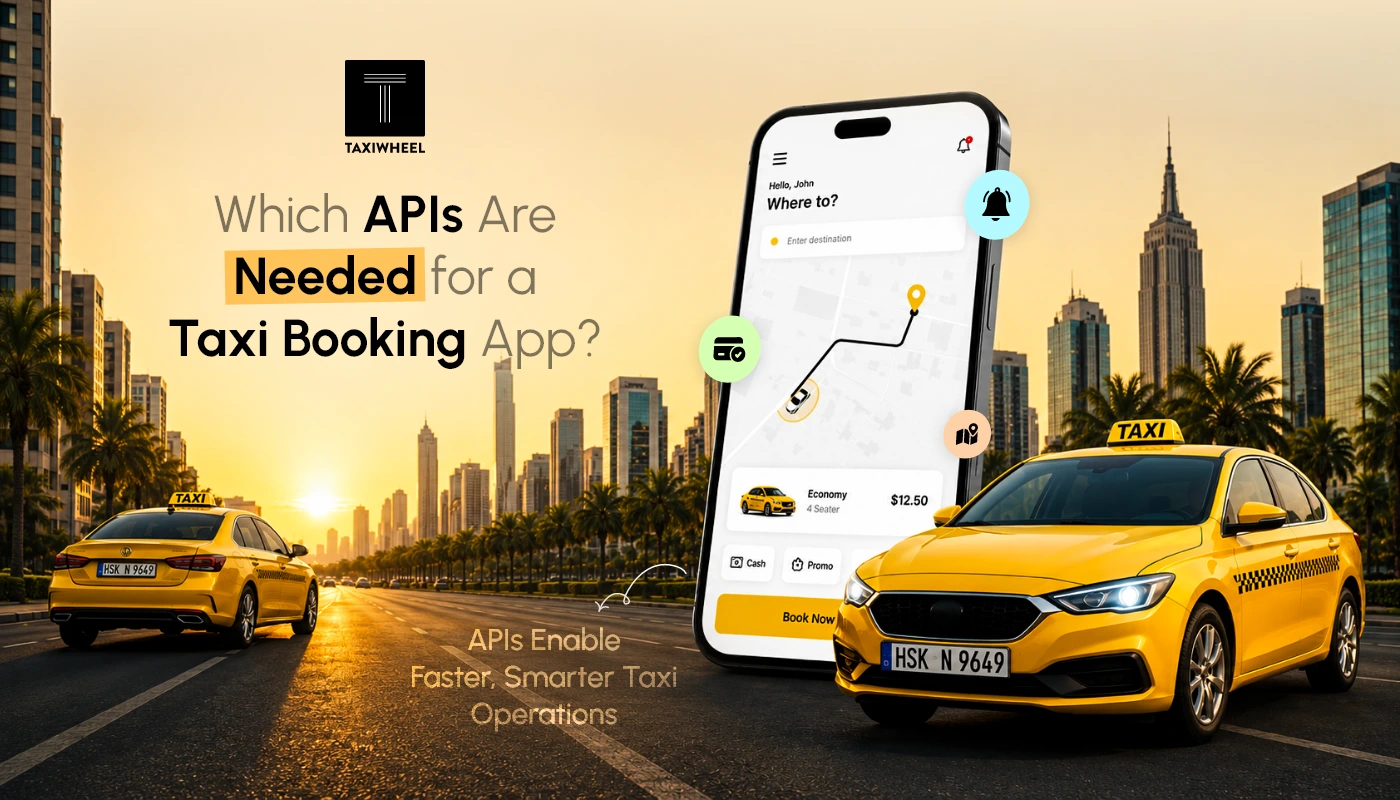
Taxi App APIs Explained: Maps, Payments, Notifications & Dispatching
A taxi app API is a software interface that allows a ride-booking platform to exchange data with maps, payment gateways, notification services, dispatch systems, and other external technologies.
APIs form the operational backbone of modern ride hailing apps. They help passengers find pickup locations, allow drivers to receive trip requests, calculate routes and fares, process digital payments, and deliver real-time ride updates.
For businesses planning taxi app development, selecting the right APIs is as important as designing the passenger or driver application. Poorly integrated APIs can cause inaccurate locations, delayed ride assignments, payment failures, and missed notifications.
This guide explains the essential APIs used in taxi booking app development and how they work together.
What Is an API in a Taxi App?
An application programming interface, or API, is a set of rules that allows two software systems to communicate.
In a taxi app, APIs connect the main platform with external services. For example, a maps API can convert a passenger’s address into geographic coordinates, while a payment API can securely initiate and confirm a transaction.
Instead of developing every capability from the beginning, a taxi booking app development company can integrate established services for:
- Maps, routes, and location search
- Online payments and digital wallets
- Push notifications and SMS alerts
- Driver-passenger communication
- Identity and document verification
- Taxi dispatching and trip assignment
- Analytics and operational reporting
The passenger app, driver app, backend, admin panel, and dispatcher dashboard exchange data through APIs throughout the ride lifecycle.
How Does a Taxi App Work?
A taxi app connects passengers, available drivers, and fleet operators through a centralized digital platform.
Here is the typical process:
- The passenger enters a pickup point and destination.
- The maps service identifies both locations and calculates a possible route.
- The platform estimates the fare using distance, duration, vehicle category, and pricing rules.
- The dispatch system searches for eligible drivers near the pickup point.
- A driver receives the request and accepts the trip.
- Both users receive booking and arrival updates.
- The app tracks the journey through location data.
- The payment system processes the fare after trip completion.
- Ride records become available to passengers, drivers, and administrators.
APIs coordinate these activities without requiring each system to operate independently.
Maps APIs for Taxi Booking Apps
Maps APIs provide the location intelligence required to search addresses, display vehicles, calculate routes, estimate arrival times, and track active trips.
Geocoding and reverse geocoding
Geocoding converts an address into latitude and longitude coordinates. Reverse geocoding converts coordinates into a readable address.
A passenger may enter “Central Station” as a pickup location. The app must identify the correct coordinates before it can search for nearby drivers or calculate a route.
Place search and autocomplete
Place APIs suggest addresses and points of interest while a user types. This reduces input errors and helps passengers select recognizable pickup and destination points.
Route calculation
Routing APIs calculate a practical path between two or more locations. Depending on the provider and configuration, route calculations may consider travel distance, estimated duration, road conditions, travel mode, or waypoint order.
Live location tracking
The driver app periodically sends location updates to the platform. The passenger interface uses those coordinates to show the vehicle’s latest reported position.
Tracking frequency should be balanced carefully. Very frequent updates may improve visual movement but can increase battery usage, mobile-data consumption, and infrastructure load.
Payment Gateway APIs for Taxi Apps
Payment APIs allow passengers to pay through cards, supported bank methods, mobile wallets, or other locally available options.
A typical payment workflow includes:
- Creating a payment request on the server
- Presenting a secure payment interface
- Confirming the payment method
- Receiving the transaction status
- Recording the completed or failed payment
- Initiating refunds when required
Stripe, Adyen, Braintree, Razorpay, PayPal, and regional payment providers may be considered, but there is no universally “best” gateway. The correct choice depends on operating countries, currencies, settlement requirements, supported payment methods, compliance needs, transaction fees, and marketplace capabilities.
A taxi platform may also require split payments or driver payouts. These workflows should be evaluated separately from basic passenger checkout.
Sensitive card information should not be stored directly in the taxi app unless the business has the infrastructure and compliance controls required to handle it securely.
Notification APIs for Ride Updates
Notification APIs keep passengers and drivers informed during time-sensitive stages of a journey.
Common notifications include:
- New trip request
- Driver acceptance
- Driver approaching
- Driver arrival
- Trip started or completed
- Payment success or failure
- Booking cancellation
- Scheduled-ride reminder
Firebase Cloud Messaging can send cross-platform push messages to supported mobile and web applications. Apple Push Notification Service is used to deliver notifications to Apple devices. SMS providers can support important alerts when push notifications are unavailable or disabled.
Critical ride events should also appear inside the app. A push notification alone is not a guaranteed record of the latest trip status because delivery can be affected by device settings, connectivity, or operating-system restrictions.
What Is a Taxi Dispatch API?
A taxi dispatch API connects booking requests with the platform’s trip-assignment system.
It receives information such as the passenger’s pickup location, requested vehicle category, booking time, service zone, and nearby driver availability. The dispatch logic then identifies suitable drivers and sends the trip request.
Dispatch rules may consider:
- Distance from the pickup point
- Driver availability and status
- Vehicle category
- Service-zone permissions
- Driver workload or queue position
- Scheduled-booking requirements
- Accessibility or passenger preferences
- Operator-defined priority rules
The system may offer the ride to one driver, notify several eligible drivers, or assign it manually through a dispatcher panel.
How Does Taxi Dispatch Work?
Taxi dispatch generally follows five stages:
Booking intake: The system receives a request from the passenger app, website, call centre, or dispatcher.
Driver discovery: It searches for active drivers who meet the trip requirements.
Ranking: Eligible drivers are evaluated using location, vehicle type, operational rules, and availability.
Trip offer: The selected driver or group of drivers receives the request.
Reassignment: If the ride is rejected or unanswered, the system searches again or sends the booking to a human dispatcher.
A strong dispatch system should also manage cancellations, scheduled rides, no-response situations, driver status changes, and service-zone restrictions.
APIs and the Taxi Service App Business Model
The selected APIs must support the chosen Taxi service app business model.
A fleet-owned service may need vehicle monitoring, driver shifts, maintenance records, and centralized dispatch. A marketplace may require driver onboarding, commissions, payouts, and service-area controls. A subscription model may need recurring billing, plan management, and usage limits.
Businesses using white label taxi app solutions can begin with an existing technical foundation and configure branding, pricing, service categories, operating zones, and integrations. TaxiWheel, for example, presents its white-label platform around rider booking, real-time tracking, payment options, driver management, dispatch capabilities, and administrative control.
How Much Does Taxi App API Integration Cost?
There is no fixed cost for taxi app API integration.
The total depends on:
- Number and complexity of APIs
- Passenger, driver, web, and admin platforms
- Countries and payment methods supported
- Custom dispatch requirements
- Existing backend quality
- Security and compliance work
- Testing and failure-handling requirements
- Vendor usage charges
- Post-launch monitoring and maintenance
Businesses should separate the one-time engineering cost from recurring API fees. Map providers may charge according to requests or billable services, while payment gateways commonly charge transaction-based fees. Notification, communication, identity-verification, and analytics providers may use separate pricing structures.
A reliable estimate requires a defined feature list, expected booking volume, target geography, and integration architecture.
How Do APIs Improve Taxi App Scalability?
APIs improve scalability by separating major functions into independently managed services.
For example, payment processing can scale without changing dispatch logic, while notification infrastructure can handle increased message volume without redesigning the passenger app.
Scalable taxi booking app development also requires:
- Rate-limit management
- Secure authentication
- API monitoring and logging
- Retry and fallback mechanisms
- Caching where appropriate
- Asynchronous event processing
- Database and server scaling
- Provider-outage planning
APIs do not make an app scalable automatically. Scalability depends on how the integrations, backend services, databases, and operational workflows are designed.
Conclusion
Maps, payments, notifications, and dispatch APIs work together to transform a basic mobile interface into an operational taxi platform.
Maps APIs manage locations and routes. Payment APIs support secure fare collection. Notification APIs deliver ride updates. Dispatch APIs connect passenger demand with eligible drivers.
For operators evaluating custom taxi app development or ready-made white label taxi app solutions, API selection should be based on service geography, booking volume, business model, compliance requirements, and long-term operating costs. A well-planned API architecture creates a more reliable foundation for launching, managing, and scaling a taxi service.
Frequently Asked Question
A taxi booking app generally requires maps, geocoding, routing, payments, push notifications, authentication, communication, and dispatch APIs. Additional APIs may support SMS, identity verification, analytics, driver payouts, fraud prevention, or customer support.
Maps APIs convert addresses into coordinates, suggest places, calculate routes, estimate travel time, display maps, and support vehicle tracking. These capabilities help passengers select locations and allow the platform to find drivers and manage trips.
The best payment API depends on the app’s countries, currencies, payment methods, fees, refund requirements, settlement process, and driver-payout model. Stripe, Adyen, Braintree, Razorpay, PayPal, and regional providers are common options, but availability varies.
A taxi dispatch API sends booking data to the trip-assignment system, identifies eligible drivers, delivers ride offers, receives responses, and updates trip status across passenger, driver, admin, and dispatcher interfaces.
Taxi app API integration has no universal fixed price. Cost depends on the number of platforms, API complexity, custom dispatch rules, payment workflows, target regions, security requirements, testing effort, and ongoing provider charges.
APIs separate maps, payments, notifications, dispatch, and other functions into connected services. This allows individual components to handle growing demand, provided the backend includes monitoring, rate-limit controls, retries, caching, and scalable infrastructure.
Recent Blogs
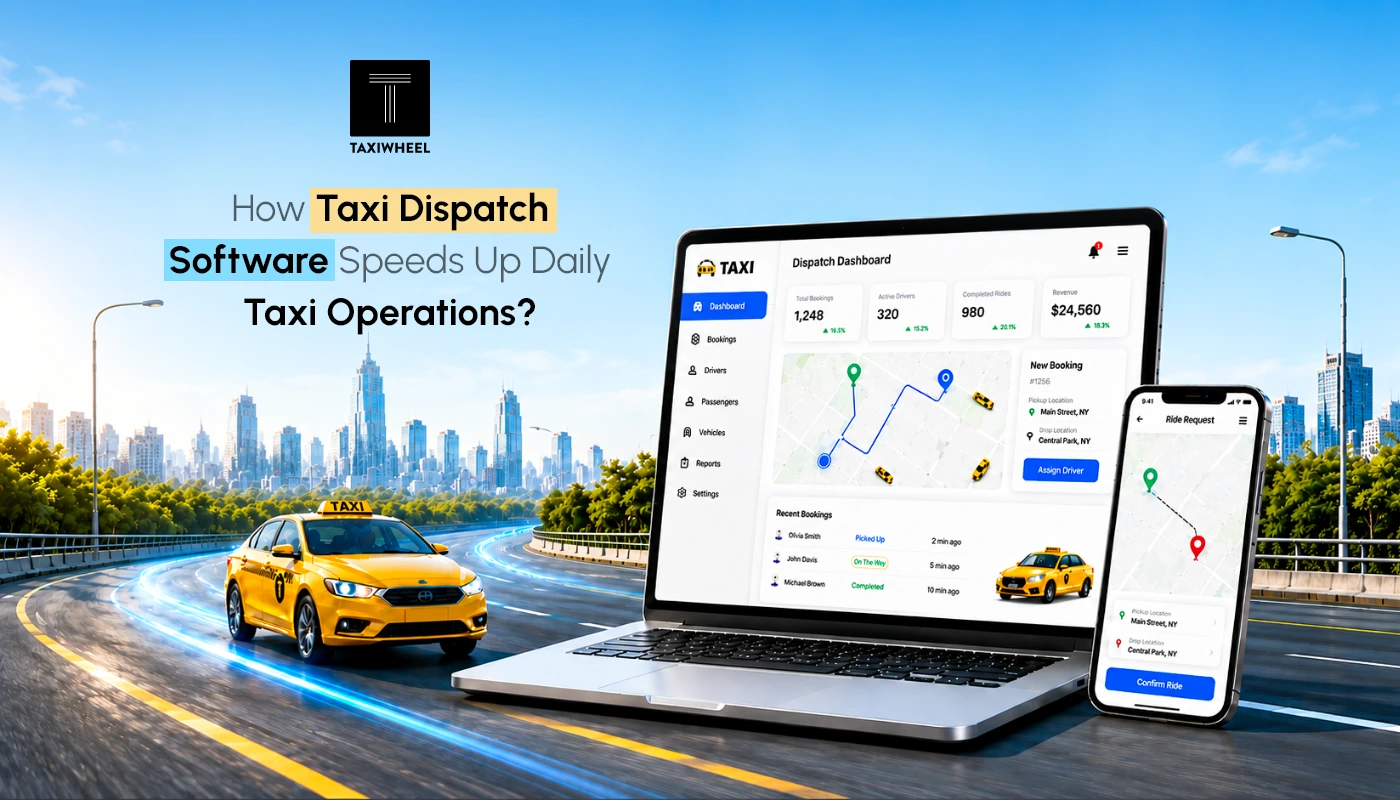
Taxi dispatch software is a centralized platform that automates ride booking, driver assignment, trip tracking, payments and fleet management. It helps taxi operators reduce manual coordination, improve driver utilization, shorten passenger wait times and manage daily operations from a single dashboard. As customer expectations shift toward faster bookings, real-time tracking and cashless payments, relying on […] Read more

Taxi apps are no longer just about booking a ride and tracking a driver. In 2026, AI is quietly powering the decisions that happen behind every smooth trip. It helps taxi businesses assign drivers faster, predict demand, calculate smarter fares, reduce waiting time, and improve customer support. For fleet owners, startups, and transport operators, this […] Read more

Ride-hailing, however, is no more about booking a cab from point A to B, it is transitioning into a highly intelligent, sustainable and decentralized ecosystem driven by advanced technologies and changing business models in 2026. From AI impacting taxis operations to electric vehicles going mainstream and the growth in driver owned platforms, a metamorphosis is […] Read more