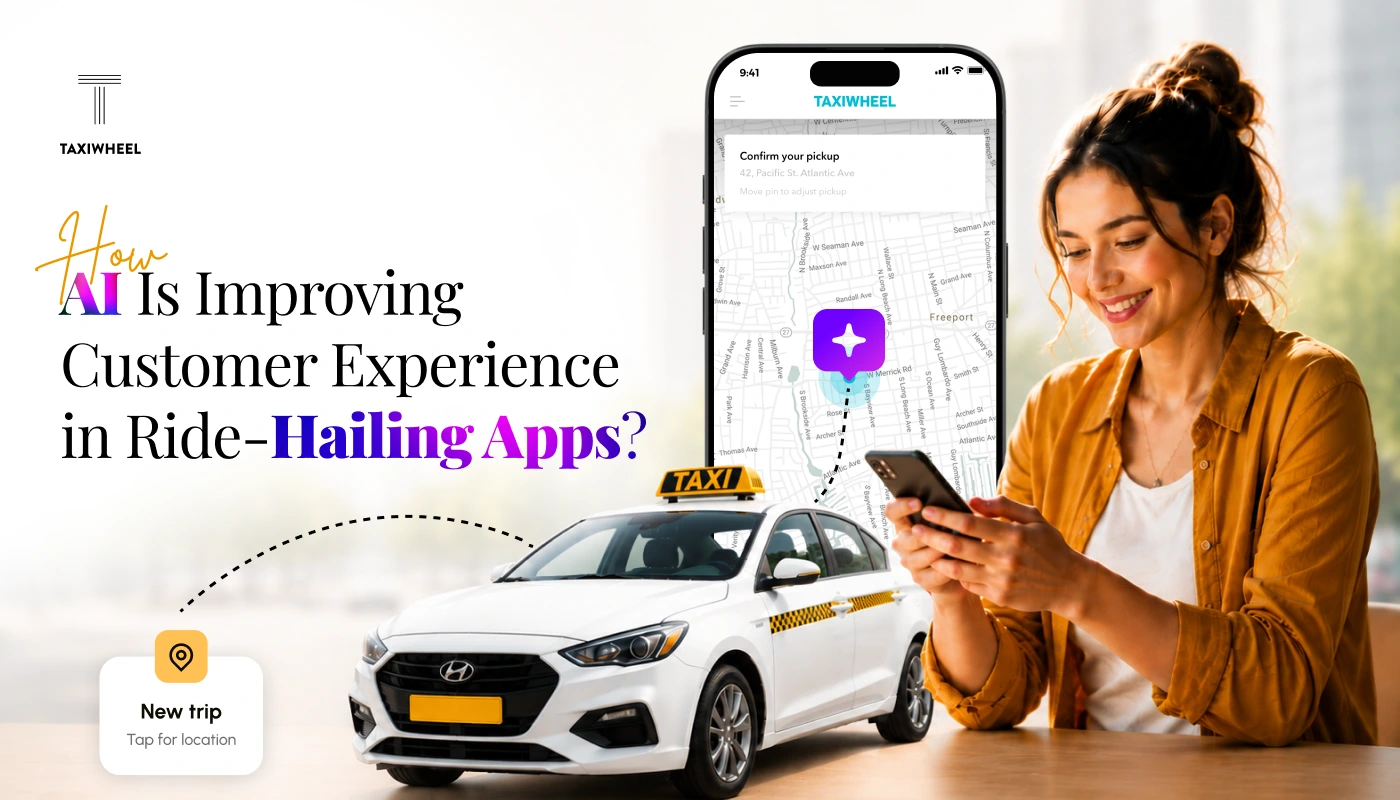
How AI Is Transforming Taxi Dispatch, Pricing & Customer Experience in 2026
Taxi apps are no longer just about booking a ride and tracking a driver. In 2026, AI is quietly powering the decisions that happen behind every smooth trip. It helps taxi businesses assign drivers faster, predict demand, calculate smarter fares, reduce waiting time, and improve customer support. For fleet owners, startups, and transport operators, this means fewer manual tasks and better control over daily operations. From AI in taxi dispatch systems to smarter pricing and customer automation, AI is helping taxi platforms become faster, more reliable, and easier to scale.
AI Is Moving Taxi Apps Beyond Basic Booking
Earlier, taxi apps worked on simple logic.
A customer booked a ride.
The system searched for a nearby driver.
The driver accepted or rejected the request.
The ride started.
That model still works, but customer expectations have changed.
Today, passengers want:
- Faster pickups
- Accurate ETAs
- Clear fare estimates
- Easy communication
- Safe rides
- Quick support
- Smooth payments
At the same time, taxi businesses want better driver usage, higher ride completion, fewer cancellations, and more visibility into fleet performance.
That is exactly where AI ride hailing technology 2026 is creating real value.
AI helps taxi apps study data, understand patterns, and make better decisions in real time.
Smarter Dispatching Means Better Driver Matching
Dispatch is one of the most important parts of any taxi business.
If dispatch is slow, customers wait longer.
If dispatch is poor, drivers lose time.
If dispatch fails, the business loses bookings.
Traditional dispatch systems often assign the nearest driver. But the nearest driver is not always the best choice.
A nearby driver may be stuck in traffic. Another driver may be slightly farther away but can reach the customer faster.
This is where AI in taxi dispatch systems makes dispatching smarter.
AI can check:
- Driver location
- Customer pickup point
- Traffic conditions
- Route distance
- Driver availability
- Estimated arrival time
- Driver acceptance behavior
- Vehicle type
- Ride history
Instead of simply finding the nearest driver, AI finds the most suitable driver.
That small difference can improve pickup speed, reduce cancellations, and create a better ride experience.
AI Helps Reduce Passenger Waiting Time
No customer likes seeing “searching for driver” for too long.
Long wait times are one of the biggest reasons passengers cancel rides or switch to another app.
AI helps solve this by predicting demand before it happens.
For example, the system may learn that:
- Office areas get busy after 6 PM
- Airports need more drivers late at night
- Shopping malls see higher demand on weekends
- Hospitals need regular pickup availability
- Events create sudden ride spikes
With this data, smart taxi dispatch software can suggest where drivers should be positioned before demand increases.
This helps reduce passenger waiting time.
It also helps drivers avoid low-demand areas, complete more rides, and spend less time idle.
For taxi businesses, that means better fleet utilization and more completed trips.
AI Taxi Pricing Algorithms Make Fares More Intelligent
Pricing is a sensitive part of every taxi app.
If the fare is too high, customers leave.
If the fare is too low, drivers and businesses lose revenue.
If the fare feels unclear, customers lose trust.
That is why AI taxi pricing algorithms are becoming important.
AI can calculate fares using multiple real-time factors, such as:
- Distance
- Trip duration
- Traffic
- Demand
- Driver availability
- Weather
- Peak hours
- Location
- Past booking patterns
This helps taxi apps move beyond fixed pricing.
With dynamic pricing taxi apps AI, fares can adjust when demand rises or when fewer drivers are available in a particular area.
For example, if many customers are booking rides from an airport and only a few drivers are nearby, AI can adjust fares to balance demand and supply.
But smart pricing is not only about increasing fares.
AI can also help businesses keep pricing fair by applying fare limits, promo codes, discounts, and transparent fare rules.
Dynamic Pricing Becomes Better With AI
Dynamic pricing is not new.
Many ride-hailing apps already use it. But AI makes it more accurate and more balanced.
A basic pricing system may increase fares only because demand is high.
An AI-based system can go deeper.
It can understand why demand is high, how long it may continue, how many drivers are nearby, how traffic may affect trips, and how customers may respond to price changes.
This helps taxi businesses avoid random fare jumps.
AI can also help create more customer-friendly pricing by showing estimated fares clearly before booking.
That transparency matters.
Customers may accept a higher fare during peak hours if they understand why the price changed.
AI Improves the Full Customer Journey
A good taxi app experience is not just about the ride.
It starts before booking and continues after the trip ends.
AI customer experience in ride hailing helps improve every step of that journey.
AI can help customers by:
- Suggesting frequent destinations
- Recommending better pickup points
- Showing accurate ETAs
- Sending useful ride updates
- Supporting quick fare estimates
- Helping with payment issues
- Answering common support questions
- Personalizing app experiences
For example, if a passenger regularly books a ride from home to office, the app can show that destination as a quick option.
If traffic changes, AI can update the arrival time.
If the driver is delayed, the system can notify the customer or suggest reassignment.
These small improvements make the app feel faster, smarter, and more reliable.
AI Chat Support Reduces Customer Friction
Customer support is another area where AI is useful.
Passengers often ask simple, repeated questions:
- Where is my driver?
- Why did my fare change?
- How do I cancel a ride?
- Where is my refund?
- How do I use a promo code?
- How do I report a lost item?
AI chatbots can answer many of these questions instantly.
This reduces pressure on support teams and gives customers faster help. For taxi businesses, it means fewer manual support tickets.
For passengers, it means less waiting. That is a win for both sides.
Taxi App Automation Using AI Reduces Manual Work
Taxi operations involve many repeated tasks, from dispatchers assigning rides and admins monitoring drivers to support teams answering queries, fleet managers checking reports, drivers waiting for ride requests, and customers expecting live updates.
Taxi app automation using AI helps reduce this manual workload.
AI can automate:
- Ride assignment
- Fare estimation
- Route suggestions
- Driver tracking
- Customer notifications
- Demand forecasting
- Support responses
- Cancellation alerts
- Performance reporting
This does not mean AI replaces the team.
It simply handles the repetitive tasks that slow the team down.
Your staff can focus more on operations, driver relationships, customer satisfaction, and business growth.
AI Gives Fleet Owners Better Control
Fleet management becomes harder as a taxi business grows. More vehicles mean more drivers, trips, routes, ratings, cancellations, payments, and maintenance needs.
AI helps fleet owners understand what is happening across the business.
It can show:
- Which drivers complete more rides
- Which vehicles are underused
- Which zones generate more bookings
- Which routes cause delays
- Which time slots bring more revenue
- Which drivers receive better ratings
- Where cancellations happen most often
This gives business owners better visibility.
Instead of guessing what is wrong, they can use data to improve operations.
That is one of the biggest benefits of AI in taxi fleet management.
It helps reduce idle time, improve vehicle usage, support drivers better, and increase ride completion.
Small Taxi Businesses Can Start With Simple AI Features
AI does not have to be expensive from day one.
Small taxi businesses can start with basic features and grow step by step.
A good starting point includes:
- Smart dispatch
- Real-time driver tracking
- Automated fare estimates
- Route optimization
- Customer notifications
- Basic analytics
- AI chatbot support
As the business grows, advanced AI features can be added.
These may include demand prediction, dynamic pricing, predictive maintenance, driver behavior analysis, and customer personalization.
This makes AI practical for local taxi companies, fleet owners, car rental operators, chauffeur services, and mobility startups.
Where TaxiWheel Fits In?
TaxiWheel gives businesses a ready-made taxi app solution to launch and scale faster.
It includes passenger app, driver app, admin panel, dispatcher panel, ride booking, fare estimates, real-time tracking, multiple payment options, promo codes, reports, and advanced mobility features.
For businesses planning to use AI, TaxiWheel can act as a strong foundation.
With the right AI-driven upgrades, taxi businesses can improve dispatching, pricing, customer support, driver management, and fleet operations.
The result is simple.
Less manual work.
Faster decisions.
Better ride experiences.
More control over growth.
Final Thoughts
AI is changing taxi apps from simple booking platforms into intelligent mobility systems.
It helps taxi businesses dispatch faster, price smarter, support customers better, guide drivers more effectively, and manage fleets with greater control.
In 2026, taxi businesses that use AI will be better positioned to reduce manual work, improve service quality, and scale faster.
For fleet owners, taxi startups, and transport operators, the opportunity is clear.
The future of taxi booking is not only digital.
It is intelligent, automated, and built around better decisions.
TaxiWheel gives businesses the foundation to move in that direction with a ready-made taxi app solution designed for modern mobility growth.
Frequently Asked Question
AI-based taxi dispatch and routing systems usually use machine learning, GPS tracking, predictive analytics, cloud computing, real-time traffic data, route optimization engines, and automated decision-making models.
AI algorithms study booking history, peak hours, location trends, traffic, weather, customer behavior, events, and driver availability to predict demand and place drivers more effectively.
AI implementation cost depends on features, fleet size, app complexity, and customization. Small businesses can start with basic automation and add advanced AI features later.
Small fleet owners can begin with smart dispatch, automated ride assignment, fare estimation, driver tracking, customer notifications, route optimization, and basic analytics.
Businesses should consider data quality, pricing transparency, driver adoption, customer trust, app security, integration complexity, and continuous system optimization.
Recent Blogs

Smart cities are creating new opportunities for taxi businesses by connecting transport services with real-time data, digital payments, intelligent dispatch systems and multimodal travel platforms. These developments allow operators to serve more passengers, improve fleet utilization and introduce new models such as corporate mobility plans and taxi monthly subscriptions. The U.S. Department of Transportation describes […] Read more
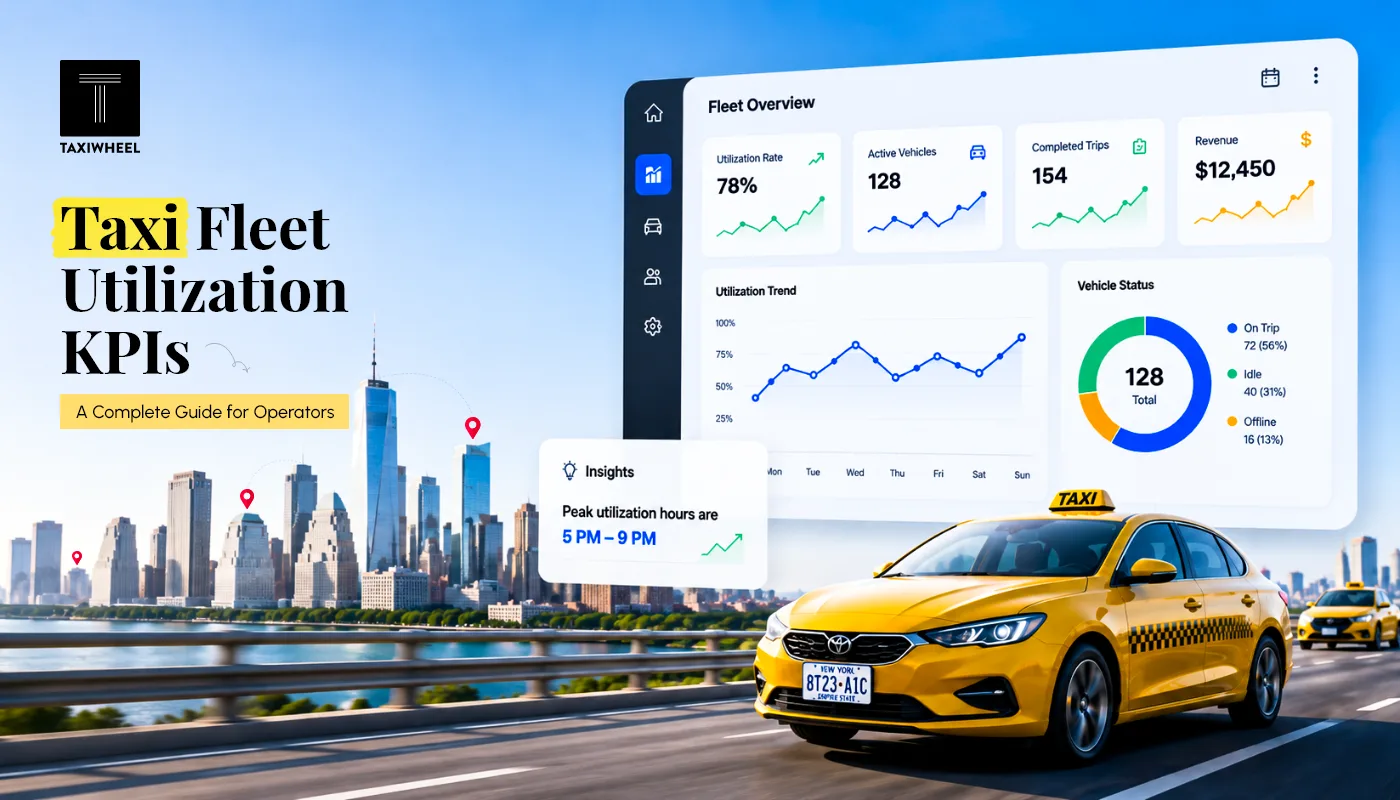
Fleet utilization shows how effectively a taxi company uses its available vehicles to complete revenue-generating trips. A strong utilization system tracks more than whether a car is moving. It also measures occupied time, empty mileage, driver availability, downtime, trip completion, cost and customer demand. Taxi operators can calculate utilization by dividing productive vehicle time by […] Read more
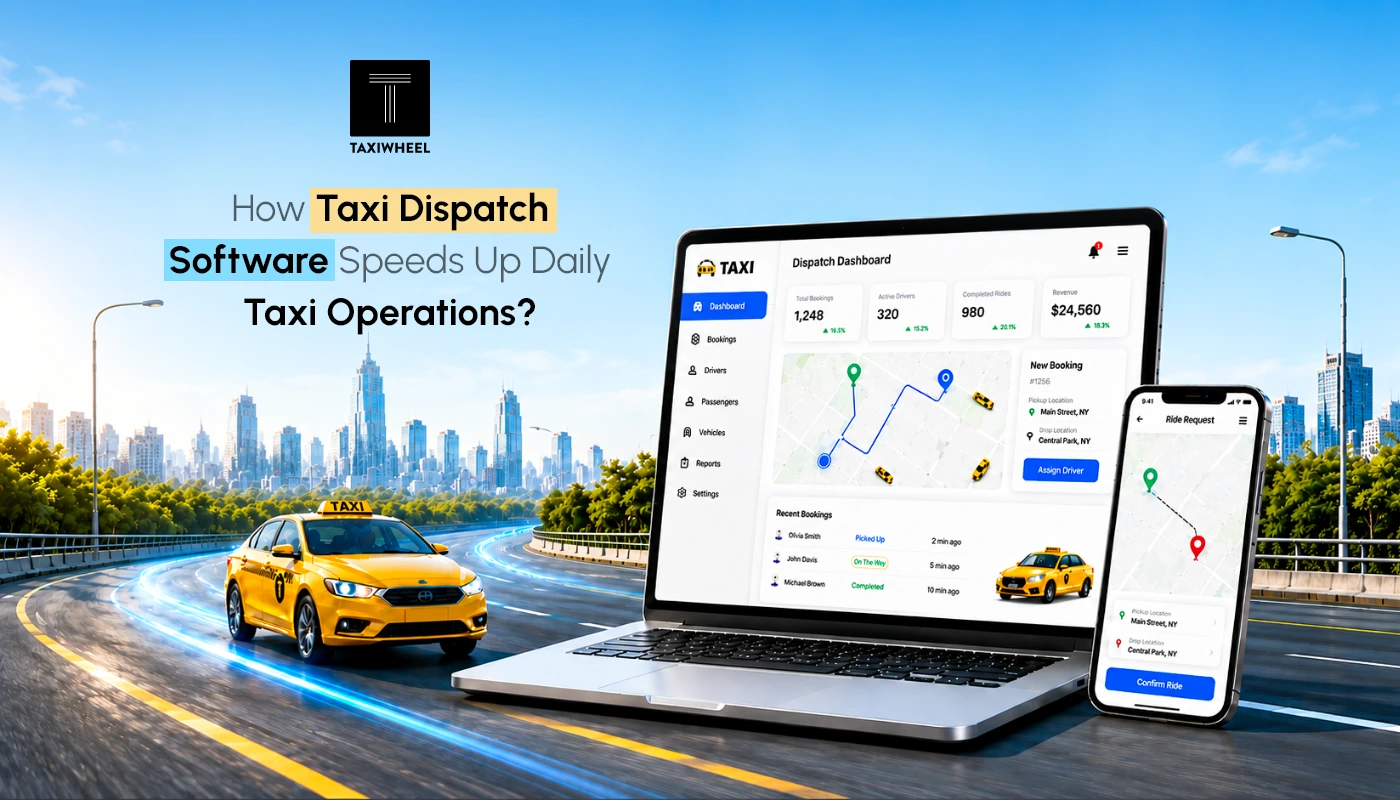
Taxi dispatch software is a centralized platform that automates ride booking, driver assignment, trip tracking, payments and fleet management. It helps taxi operators reduce manual coordination, improve driver utilization, shorten passenger wait times and manage daily operations from a single dashboard. As customer expectations shift toward faster bookings, real-time tracking and cashless payments, relying on […] Read more